CRAFT & STRATEGY · 3 min read · July 19, 2026
Why Templates Hurt More Than They Help
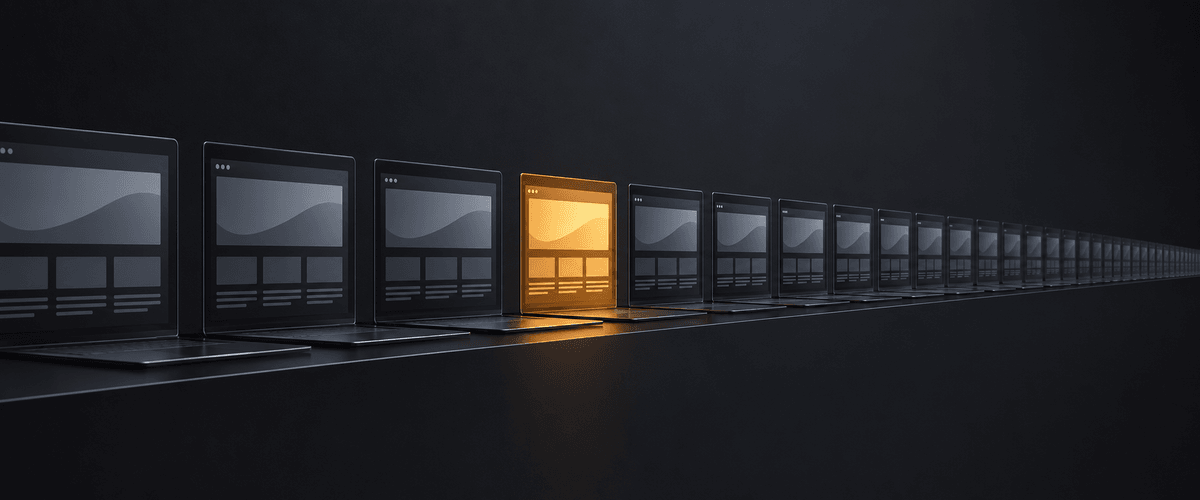
Most websites today start the same way: pick a template, drop in your logo, swap out some stock photos, and call it done. It's fast, it's cheap, and it feels like progress. But a template was never built for your business — it was built to work "well enough" for thousands of businesses at once, which means it was never built to work best for any single one of them, including yours.
That tradeoff is easy to miss at first glance. A templated site can look clean, modern, even professional. What it can't do is reflect the specific things that make your business different — how your customers actually think, what makes them trust you over a competitor, what your product or service actually requires from a layout. A template has no idea any of that exists. It was designed around averages, not around you. A landing page built for a yoga studio and a landing page built for a plumbing company might come from the exact same template, with the exact same content blocks in the exact same order — because the template doesn't know the difference, and it was never asked to.
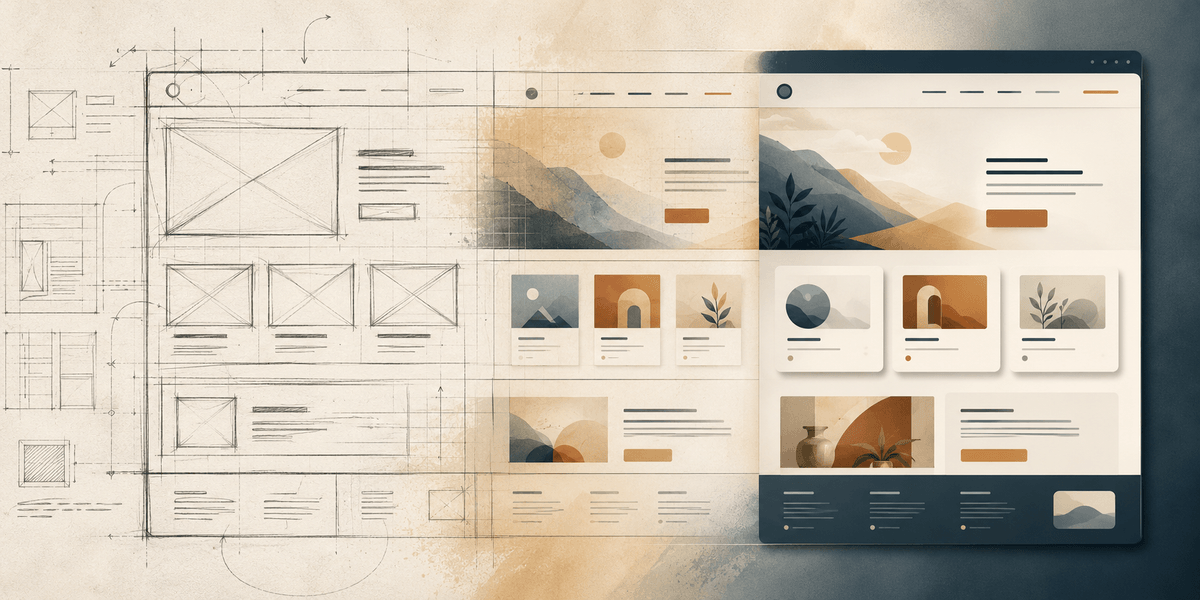
The cost shows up slowly. A visitor lands on your site and it feels vaguely familiar — not because they trust you yet, but because they've seen the same layout, the same button placement, the same stock photography style on five other sites this month. Familiarity isn't the same as trust, and generic isn't the same as safe. In a crowded market, blending in is often more expensive than it looks, because the businesses that stand out are the ones getting remembered, and the ones that don't are just noise. Think about the last time you actually remembered a website after closing the tab. It probably wasn't the one that looked like every other one.
There's also a slower, more technical cost. Templates are built for flexibility across thousands of use cases, which usually means bloated code, unnecessary features, and slower load times — all things that hurt both user experience and search visibility over time. A site built specifically for one business, with only what that business actually needs, tends to load faster and rank better, simply because nothing is fighting against a generic structure it was never designed for. Every unused feature a template carries — the booking widget you don't need, the multi-language toggle you'll never use, the extra scripts loading in the background — is weight your actual visitors have to wait through, whether they ever benefit from it or not.
This matters more now than it used to, because the way people find businesses is changing. Search engines and AI systems increasingly reward pages that are clear, purposeful, and specific — the opposite of a page trying to be everything to everyone. A site built around one business's real structure tends to communicate what it actually offers far more clearly than a generic layout stretched to fit, which matters whether a human or an AI system is the one evaluating it.
None of this means templates are useless — for some businesses, at some budgets, they're a reasonable starting point, especially early on when the priority is simply having something online at all. But if your website is meant to be a real asset, not just a placeholder, it's worth asking whether "good enough for everyone" is actually good enough for you.
Frequently Asked
- Do template websites actually hurt SEO?
- They can, mainly through bloat — templates carry code and features built for thousands of different use cases, most of which your specific site doesn't need. That extra weight can slow load times, and speed is a real ranking factor. A site built with only what it actually needs tends to load faster and perform better in search.
- Are custom-built websites always more expensive?
- Not necessarily more expensive, but they do take more time upfront, since every layout decision is made specifically for your business rather than reused from a preset. That investment usually pays off in a site that performs better and needs fewer workarounds down the line.
- Can I switch from a template to a custom site later?
- Yes, and many businesses do exactly that once they outgrow what a template can offer. It's easier to start custom from the beginning, but a later migration is a completely normal step as a business grows past what a generic layout can support.
If your site still looks like everyone else's, that's worth a conversation.
Let’s get started